The Scratch

Danny Lee Brewer’s body was finally found by an old tinker woman on the road three miles south of the Scratch. She came into Castro’s store with her wares dangling on the wooden frame pack she wore, battered pots and tin cups clanging, and announced, “Dead body down south. You wanna buy a cup, maybe?”

Well, maybe he did – travelers were few and far between – but the mention of a corpse soured him on an immediate transaction. “What’s it look like?”

“Don’t look like much. Like raw meat. Sandstorm had its way. Maybe you spare a pone for an old lady, I can go show you.”
Normally he would have ignored this beggary – it was a store, not a charity – but he knew well that Danny Brewer had been missing from his home last night, when the storm winds had been shrieking over the canyon walls of the Scratch and the townspeople had been huddling in their cellars with their finest breathing masks tied across their faces. Hadn’t Ella Weaver come to this very shop in tears, braving the stinging sand, to ask him if he’d seen Danny, because Danny wasn’t at home?

Well, Castro hadn’t seen him. But he had an idea where he was now.

“All right,” he sighed, coming from behind the counter. “One pone, and you show me.” He ducked his head in the back room, said to his son, Segundo, “Watch the shop. We may be a while.”

When he handed the old lady the pone, she cradled it reverently. “A little paste?” she said hopefully. “No paste, no good, right?”

He sighed and got a jar of beejum from under the counter. It was a salty, fermented paste made from the bodies of bloodbeetles (minus their poison glands, full of bitter ink-blue toxin), and it and swordgrass pones were the staples of life in the Scratch. The beetles lived in the swordgrass, and the grass was nearly all that grew unprotected in the wild anymore.

He got out a knife, too, and cut the pone in half for her, then spread the beejum himself. If he’d let her do it, no doubt she’d have spooned up half a cup. Still, she grinned a happy gummy smile, and he had no doubt the calories would do her good. She was a withered doll beneath her rags, old leather stretched across a frame of sticks.

He made another pone sandwich for himself, and put it in a bag along with two plastic water bottles (worn gray with use, but still serviceable), put on his woven grass hat and ancient boots, and they set off.

Along the way they stopped first at the well, so the old lady could fill her own bottles. She grinned and waved at the other townfolk she saw, proffering a little painted clay bear to the children. “Ask your parents, it’s not much, five pones and he’s yours.”

“What’s your name?” Castro asked.

“Mayfair Mary. What you need, I carry.”

“Except food,” he observed sardonically. “You don’t carry that.”

“That I carry it in my belly,” she cackled. “Whenever I can.”

On the way out they stopped at Mason’s, because Mason liked to know such things. Cormac Mason was the mayor, as much as the Scratch had a mayor, or anyway people tended to do what he said, because he was a builder and it was always good to be in favor with a builder. Also he was the strongest man in town, even at nearly fifty years of age, a consequence of lifting stones all day, and people naturally seemed to respond to physical strength and size. It fit their preconceptions of a leader.

Mason wasn’t there, but his wife told them where he was, and it was on their way. They found him making a foundation for a new room for the Weavers, toward the southern end of the canyon. He was pounding a heavy stone mallet up and down on the dirt, packing it firm, shirt off, big arms flexing. His bushy beard came halfway down his chest, and his bald head was covered with a grass hat against the devilish sun.

Briefly Castro told him about his task and Mason frowned, eyes flicked to the window of the Weavers’ house. “Quieter, if you don’t mind,” Mason said. “Don’t want to upset her.” Belatedly Castro realized that was Ella Weaver’s room, and everyone knew she’d been seeing Danny. No point in upsetting her needlessly.

“Go see if it’s him,” Mason directed. “If it is, I’ll get Derrek and Braun with a cart and go get him. If not, it’s food for the flies.” He shook his head. “Saw him just yesterday, at noonday. Shared a meal. Then the same night he wanders off and dies. That’s the problem with brewers. Always sampling their own stock. ” Mason, Castro knew, was a Straightaway Evangelist, and didn’t approve of drinking, but of course the alcohol Brewer made from the swordgrass flour had many uses besides intoxication, and so Mason couldn’t oppose it too vociferously.

The road south was a strip of ancient asphalt through a wasteland of red rock and scrub bushes. Once there had been pines covering the hills, but the trees were long gone, known now only by precious scraps of scavenged wood. They had been killed, like everything else, by radiation, by endless drought, by the scorching sun pouring unimpeded through the damaged sky.

In places the road was drifted over with sand, and they slogged through it silently. Forty-five minutes on they left the asphalt and turned east. Squinting Castro thought he could just make something out. “You must have good eyes, to have spotted him,” he observed.

Mayfair Mary laughed. “You need good eyes, to live in this world.”

The body was at the very edge of a swathe of swordgrass, that hardiest of plants. Maybe the wayward traveller had thought to take shelter beneath it, somehow, or maybe he had been confused, thought he was at one of the patches closer to town.

It was a pitiful sight, curled up in a fetal position with its arms raised. He had taken off his shirt in an apparent effort to protect his eyes, wrapping it completely around his face, and the sandstorm had abraded most of the skin off, leaving raw red flesh embedded with grit.

Kneeling for a closer look, Castro saw that the dead man wore no shoes, and what’s more, his feet were strangely unaffected by the storm. Obviously someone had taken them. He raised an eyebrow at Mayfair Mary. “Know where his shoes are?” She shrugged innocently. No doubt stashed in her pack somewhere, to be traded at Harrisville, or Norton.

Tenderly, Castro extended a hand, lifted the head, and unwrapped the shirt. Sure enough, it was Brewer. His nose was crusted with dust, his eyes blood-red, and there was dark blood at his mouth. His skin was pale white, though, and his lips had turned dark blue with death. Having confirmed it, Castro covered his face with the shirt again.

Probably he’d died of suffocation, or dust inhalation, as was common with such storms. It was hard enough to breath inside the houses in the Scratch, and they were well-protected from the worst of it by the high canyon walls. That’s how come the Scratch even had survived, being a location protected from storms, easy to defend, and with good water at hand.

That night they had a funeral. They had it in the square outside Castro’s store, under the bare remnants of an oak that had grown there, long ago. Everyone who wasn’t too sick showed up, all hundred and twenty or so of the town’s residents. Ella May Weaver cried inconsolably.

Mason said some words. He said Brewer had been a fine man, fun to be around, always with a joke ready. He was sociable and everyone liked him. But there was also a lesson to be learned from his death: that this life demanded discipline. It demanded sober decisions. It demanded self-sacrifice. They all knew that Brewer liked a drink, or several drinks, and now it seemed it had caught up with him. Probably he’d been a bit tipsy and had gone out of town a ways, to look at the stars, because he was that kind of dreamer. Then he’d gotten turned around, somehow, and started walking the wrong way, and the storm came up and he was blinded. One mistake was all it took.

From now on, Mason decreed, alcohol would be used for the purpose God intended: as medicine and fuel. Anyone found drinking would be spoken to. Meanwhile Jephrie Piller, the apothecary, would take over the brewery.

But for now, let them remember the Danny they’d all known and loved, recognizing his virtues along with his faults. Solemnly they bowed their heads to pray.

The silence was interrupted by the low raspy cackle of the tinker lady, Mayfair Mary, laughing from the edge of the crowd, where she sat on a large stone. Despite her mirth, Mason began his prayer, but still she kept laughing, and after a few words he stopped, glaring at her. “If you can’t keep silent, leave.”

“No, no, I’m sorry,” she said, still smiling. “Go on, please.”

He did, but again she started laughing. “Do you want to share with us what’s so funny?”

“Well, you say this fellow laid out here was a jokester,” she said, eyes twinkling, “but it seems to me that you’re the really funny storyteller here.”

Mason’s dark eyes glinted in the lamplight beneath his heavy brows. “I’m not amused. And old lady or not, I’ll happily escort you out of this community, if you can’t manage to respect it enough to wait to laugh until this man is buried.”

She nodded, and stood up, bones almost audibly creaking. “Fair enough,” she said. “But don’t you want to let everyone in on your joke?”

His expression turned hard. “That’s enough. It’s time for you to go.”

“Oh, I will, I will.” She turned and lifted her pack up to the stone, preliminary to putting it on. “But look at Mr. Brewer there! Doesn’t he look like he’s grinning, too?” Involuntarily the townspeople looked, and indeed his lips were held in a grim rictus. “Why, he’s laughing so hard, he’s blue in the face! Literally!”

“I’m not laughing,” Masons said, stepping down from the platform, obviously intending to make good on his word and escort her away.

“Wait,” Castro said to the old woman. “What are you saying?”

“Look at his lips. Blue as can be. Bloodbeetle blue.” She shook her head. “This man didn’t die in the storm. Didn’t die of drink, either. He was poisoned.”

An astonished murmur from the crowd. “To my knowledge, ” she went on, still smiling, “it takes about ten hours for the poison to work. So say he ate it around lunchtime. It would have be a concentrated form, though. It takes knowledge to prepare it like that… someone who knows how to extract it.” Her eyes fixed on Jephrie Piller, the apothecary. “And why would someone do anything like that? It would take motive. A desire for property, say. Or a pretty girl between them.” She looked at Ella May Weaver. “And a determined man to do it.” And finally her eyes returned to Mason.

“Get out,” the big man demanded, closing the gap between him and Mary in a few angry strides, all politeness gone from his tone. For a second Castro thought he might actually strike the old woman, but then Mason seemed to remember the others there and restrained himself. “You come to our town, spreading lies, accusing people falsely – we ought to string you up, you, you witch.”

“No need,” she said, turning her back on him. “You won’t see me again, I promise. But –” she turned a knowing eye one last time to the crowd – “I just think people should know what they’re really living with.”

With that she trudged away, heading north into the wastes. Mason stared after her, big fists clenched, face tight with rage. Then he turned and faced his neighbors.

The Assassination of Snuffkin McGillis

Snuffkin had been exsanguinated.

Normally, when Patty McGillis woke up in the morning, her cat was one of two places: sitting on her pillow meowing in her face, or, if he’d refused to come in the night before, sitting on the back step meowing at the door. Today he was not on her pillow, so she stepped outside, expecting to hear his insistent cries.

And sure enough, there he was, lying at her feet in the early summer sunshine. “Good morning, Snuffy,” she said, squatting down to pet him. “All tired out?”

As soon as she touched him, she knew something was wrong. He didn’t respond at all, didn’t stretch out and flex his claws, didn’t flop over for a belly rub. His calico fur was soft as ever, but the lithe little body beneath it was unmoving. “Snuffkin?”

She laid her hand on his body and shook him just a tiny bit, then retracted her hand, tears already coming to her eyes. She sat watching him for a good minute, but his sides failed to rise and fall, his fur didn’t expand and contract, and his eyes, she saw, were half-open and utterly unmoving. Snuffkin was clearly, unalterably dead.

Gingerly, she reached out and took the cat in her arms. A sob shook her, at this completely unexpected hurt in what was already a difficult year. Snuffkin wasn’t even old! He was just six years old, full of life… too much life, sometimes, like how he’d offer his belly and then decide to scratch the shit out of you, or how he was always staying out at night, fighting with the other cats in the neighborhood, like that wild tom they called Lion who seemed to live in the empty lot down the street… It wasn’t fair! It wasn’t his time!

She stroked his fur, her cheeks wet, sobbing. But how had he died? She always expected, if this happened, that Snuff would just disappear, hit by a car, or carried away by a fox. Instead, here he was. He hadn’t been sick.

As she petted him this last time, she examined his little body, looking for a sign. He could have been hit by a car, and come back here and died of internal injuries. That was the most likely answer, though her fingers came up with nothing in particular.

Then she spied them, on the left side of his neck: two dots of dried blood in the patch of white fur there. She peered closer through her tears, spreading the fur away from the injury, saw the two small puncture wounds in his skin.

“Motherfucker!” she cried, with venom. A vampire had killed her cat.

***

“It’s one of these crazies I’ve been writing about,” she told the officer taking her statement, a big, pink-faced, blond man named Askew, which was how Patty felt today. Also hurt, enraged, and a little afraid. “These cultists, the Sons of Judas.”

They were standing in her back yard, over Snuffkin’s body. The other officer, a woman, stayed in the patrol car, apparently deeming this not worth her time. “Why do you say that?” Askew asked.

“Because a vampire obviously did this. He drained poor Snuffkin and set his body here on the step.”

“Do you have video of this, or…”

“No, I don’t have video. What I have is an inbox full of threats.”

She’d finally gotten his interest. “Can you show me?”

Sitting at her desk, the same place she’d written most of her stories, she showed him the three or four threatening emails she’d received. They were all from nonsense addresses, of course, but three were signed “True Son,” and all made vague if increasingly violent threats against her person. “We know where you live,” one read, “and you know we’re invisible at night.”

“See?” she said.

“Yeah, these guys aren’t happy,” said Askew. “But you know they can’t actually turn invisible, right?”

“Of course I know,” she snapped. “I just finished writing a three-part expose on the Sons of Judas. I’m well aware of what they are and what they can do.”

Askew gave her a troubled, disapproving look. “They’re not all like this, you know. My nephew’s got vampirism. It’s not his fault. He takes his pills, works the graveyard shift, stays inside during the day. He’s a good kid.”

Vampires, it turned out, had always been with humanity. It was a unique virus, transmittable only through bodily fluids. After a brief period of coma-like sleep, those afflicted developed a powerful desire to drink blood, were sensitive to light, and grew the famous fangs. For millennia they had either hidden themselves out of fear for their own survival, or simply died shortly after contracting the virus.

These days, there were medications they could take to control the bloodlust, if not the other symptoms. Nearly all had the fangs filed down or removed. A very few, however, took their condition as a special mark, a sign of divine favor, and claimed all sorts of supernatural powers.

Among these organizations were the Sons of Judas, who had a thriving little club here in Denver. As a reporter for the Denver Post, Patty had spent months learning about their organization, and her final expose had run just this last Sunday.

Now the Sons were receiving renewed scrutiny, and they were clearly pissed. There was no other reason to kill her cat but to threaten her; you couldn’t transmit the virus between species.

***

Back outside, Askew’s partner used a couple cotton swabs to take samples from Snuff’s wounds. “We’ll run the DNA, see if we can get a match,” she said.

“Until then, you might want to set up a security camera or two around your place,” Askew added. “Maybe also get some bars on the lower windows.”

Patty crossed her arms, shivering. “Can’t you guys, like, stand watch tonight or something?”

Askew raised an eyebrow. “We could have someone drive by a couple times, if you want. Beyond that, I’m afraid you’d have to contact a private security contractor. Until there’s a more serious crime, that’s all we can do.”

“So after they kill me, then you’ll really investigate.”

The officer sighed. “There’s not much else we can do, at this point.” He jerked his head and the two officers began walking to the back gate. “Sorry again about your cat.”

***

That evening she dug a hole beneath the catalpa in the back yard and buried Snuffkin there in an Adidas shoebox. She held it together while she was digging, but when she tried to speak she lost it. “Snuffkin, you were a good cat. You were always so full of life, you taught me how to live better myself.” She patted down the last shovelful under pink skies and went back inside to wash up.

She slept restlessly, waking up again and again, thinking she heard a cat outside meowing. Then, somewhere around three or four a.m., she woke from a doze with a jolt, certain she really had heard a cat.

She hurried downstairs in a bathrobe, heart beating fast. She left the lights off, though. What if it was actually the guy who had killed Snuff, returning for her? Moving silently, she advanced to the window in the back study, and lifted the curtain to look outside.

The moon was high and nearly full. She stared and stared, and sure enough saw a cat hopping up the steps. It’s a ghost, she thought wildly. It’s Snuff’s ghost.

Quickly she stepped to the back door and jerked it open. With her movement the back light turned on, and the creature there ran off a few yards. But it was tawny, not calico, and it was larger than Snuff, with matted fur.

It was Lion, the wild tom from the empty lot. And he had left her a present. She knelt down and looked at it.

It was a rat, and thoroughly dead. Turning her head, she could see two little puncture marks on its neck where the blood had been sucked out.

The Sons of Judas hadn’t killed her cat, she realized. It was just Lion, fighting with Snuff they way they always had. But this time Lion had changed. The virus, she realized, had mutated. It had jumped species.

Mind aswirl, she closed the door and went back upstairs to bed. One way or another, she had another story to investigate.

***

In the early dawn she woke suddenly, eyes wide with realization. “Oh God,” she cried, as she threw on her robe again. What if she was too late?

She shoveled in her house slippers, getting them filthy. She hoped her neighbors didn’t see her. They’d think she was crazy. When she thought she was close to the box, she got down on her knees to clear away the last of the soil.

When she heard the first meows, she began crying again. Snuff wasn’t dead, of course, not really. He’d just been sleeping, in the pre-vampiric coma.

She opened the lid and Snuff exploded out of the box like a rocket, tearing halfway across the yard before stopping to lick himself. “Snuffkin!” Patty cried with joy, extending her arms to him.

But Snuffkin only hissed at her, and from where she sat she could see the exaggerated fangs. She retracted her arms, and Snuffkin turned and climbed over the fence and was gone.

Oh well, she thought. Snuff always had been a bit of a handful.

Sirens at Seven Bells

It was Jemmy Ducks as saved me, that ugly Irish farmboy we’d pressed in Galway. Name of O’Hearn, face like a smashed potato. I don’t know what happened to him, maybe someone hit him with a shovel, but his nose had gotten mashed flat and never recovered. Couldn’t breathe through it at all, only with his mouth, so it was always hanging open. Looked dumb as a rock, and he couldn’t tell you different, either, because he spoke only Irish. Any case he was good with the chickens, so that’s the job he got.

But if it weren’t for him, I’d be dead now, and no mistake. And maybe the whole ship too, every man jack of the H.M.S. Octavia leaping off the rails like boys jumping into a pond.

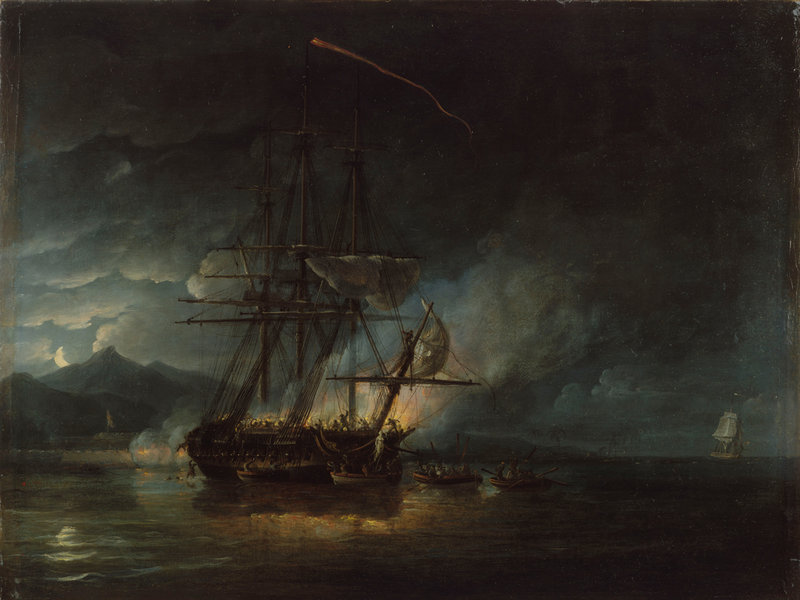
We were five days out from the Maldives, having taken on supplies there, sailing west-northwest with the wind light on our starboard tack. For days we’d been nearly becalmed, just barely making way in the water with everything spread but the pennants, but that night we’d finally caught a breeze and were making two or three knots, which had pleased everyone, with the captain saying a cheerful word before going to his cabin.

Well, past seven bells, toward the end of the watch, that breeze failed too, and we were left just wallowing. The water so calm it looked like black oil. No sound, not a lone gull or albatross, just the lonely stars and the moonless night, the men on deck staying quiet, mindful of their mates down below, sleeping sound as whales in the deep.

I was on the quarterdeck, of course, looking out at the sea, listening the creak and moan of the rigging, thinking maybe we should shake down the topgallants again, when I heard a sound like rain. And squinting into the darkness, I thought maybe I could see a disturbance in the water like a squall approaching, but that was strange because the night was perfectly clear. I didn’t know what it was, so I called up to the boy in the lookout. “Not sure, Lieutenant Hoskins,” he called back. “But I see sort of a… glow in the water, sir.”

I was going to ask what the devil that meant, but the squall, if that’s what it was, got closer and closer to the ship, so I could hear the splashes and ripples in the water just yards away. And then it stopped, suddenly as it’d arisen.

I didn’t know what to make of it, but anyone who’s been on a long voyage has seen stranger, so I shrugged it off, while keeping my eyes sharp. And standing there, I slowly began to see what the lookout had meant. There was, all around, a growing phosphorescence in the sea. It started very faintly, just a hint of pale green light, like a glowing mucus, but as we watched it grew until looking over the rail I could see it illuminating the hull of the ship. The men were murmuring, growing amazed and a little alarmed. Looking into the water, too, I could see small forms within that luminescence darting back and forth, some kind of fish, maybe.

I won’t lie, gentlemen, it gave me the shivers. More eerie than a will-o’-the-wisp, and I’ve seen those, too, back home. But gradually I also became aware of a certain scent, a very pleasant scent, actually, like perfume. In fact it reminded me strongly of my dear Anna’s perfume, back in Kettering, half a world away.

Suddenly I felt, somehow, that she was there, waiting for me. Tantalizing me, ready, if you take my meaning, and you’re men of the world, I’m sure you do. It was like she was there just out of my reach, her skin just glowing, glowing like the light in the water, and the smell of her… It was intoxicating, in every sense of the word. I looked down at the glowing, swirling depths, and in that moment I was certain she was down there, awaiting my embrace.

I wasn’t alone. The first man to jump overboard was the second mate, I think, Harry Blyme, but I barely paid any attention. Other men were moving toward the rails, throwing off their shirts and jackets, and I could see they were – well, they were standing at attention, sirs. I don’t mean to be coarse, but that’s how it was, and they went over one by one calling the names of their wives and lovers.

Some part of me knew it was wrong, but that part was small and far away. I felt like I’d inhaled a strong dose of ether, or some ambrosial gas, and with the others I tore off my jacket and hurried to remove my shoes. The fact the first men to jump in were screaming, and writhing in the water, or that the glow was turning red, didn’t stop me. I saw the master, Blake, jump in hands-first, more shocking yet when you knew he couldn’t swim a stroke.

I had my foot on the rail when Jemmy Ducks tackled me and took me to the deck. I don’t know how he was awake at that hour, maybe his hens were clucking, but when he saw the men jumping and myself about to leap, he didn’t hesitate. He ran and brought me down, and say what you will about Irish farmboys, they don’t lack for strength. I fought him, too, and would have drawn my pistol on him, had he not struck me a fierce blow to the face.

He broke my nose, as you can see, and I thank him for that. For a second the pain quite blinded me, but when it diminished blood was streaming down my chin and I no longer wished to drown myself.

Below us the water was quite agitated, screams of dying men filling the air, and some creatures were launching themselves entirely out of the water in their frenzy. Still I couldn’t make out what they were until one slapped against a sail, smacked Ducks in the cheek and stuck there.

He tore it off with a scream, threw it to the deck and smashed it with his heel and when he had I saw it was a little squid with stubby little barbed tentacles and the devil’s own eyes staring from its misshapen and mutilated body. Between its tentacles it had a ring of little teeth like a lamprey’s, and it was with these that it had bitten into Ducks’s cheek, and I’m afraid the wound did nothing to improve his beauty. He cursed the damned thing in Irish, calling it something or other, and I joined him in English.

A more vicious and revolting predator, with a more insidious technique for its hunt, I cannot imagine. Like flying fish, they can propel themselves entirely out the water, and if they land on a ship, they can still crawl away with those stubby barbed limbs. When they find their prey, they invade its sense of smell with their glowing exudation, and if it affected us so even on our ship, imagine how much worse it must be in the water!

At the first screams the men belowdecks had awoken, and they poured from the hatches and ran to the rails, thinking to help, but of course they then too would succumb. Turning I saw the captain stumble from his cabin beneath the quarterdeck, and knew I must stop him before he too was caught. “Shut the hatches,” I yelled to Ducks, knowing if he failed we would soon be alone on the frigate. “Jam them shut, if you can!”

Then I raced down the steps and seized Captain Thayer. I could tell by the look in his eyes that he was already falling victim to the squid’s scented trap. He fought me, but being younger than him by twenty years, I prevailed, and shut him in his cabin.

You may say that by the letter of the law this was mutiny, and of course this is the reason for this court-martial. But I tell you that beneath the grip of these animals he was a man momentarily insane, and he would have died along with the other two hundred we lost that night. And we would have lost the other hundred too, were it not for Jemmy Ducks.