Recently I was talking to a friend about some of my favorite science fiction and fantasy novels. “Make a list,” he said, and so I began. But the more books I added to the list, the more I ran into the question of how to organize them. I could have used a rating system – start with Lord of the Rings and work my way down – but people’s tastes vary widely, and who’s going to choose a book rated at #59?
Instead I settled on the date of publication. And as I rearranged my list, I started to see historical patterns emerging, trends I suppose I’ve always known were there, but hadn’t considered through the lens of specific works. The list became a jumping-off point to consider the history of science fiction and fantasy as a whole, with its various subgenres and development more clearly delineated, and authors placed in relationship to each other.
Understand, however, that these books haven’t been chosen to fill out a history lesson (with a few exceptions, mentioned near the end of this post). The list came first. These are actually my favorite books in the genre, and picking any one at random will yield something amazing. I guarantee it.
The Progenitors: So Old School They’re Wearing Top Hats
Jules Verne, Journey to the Center of the Earth (1864), 20,000 Leagues Under the Sea (1870)
Lewis Carroll, Alice’s Adventures in Wonderland (1865)
H.G. Wells, The Time Machine (1895), The War of the Worlds (1897)
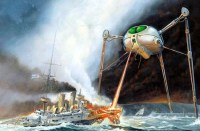 Today we call Jules Verne and H.G. Wells science fiction, although of course in their time there was no such genre. In fact, Verne was largely ignored by the French literary establishment of the time, who dismissed his popular books as boy’s adventure stories (thus establishing the pattern for the next century and a half). As with Carroll and Wells, we’re all familiar with the stories from television and movie adaptations, but the originals are well worth reading at least once. Edgar Allan Poe probably also deserves a place here, although only a few of his works engage with fantasy per se.
The Founding Fathers: Classic Sci-Fi and Fantasy from the Mid-Twentieth Century
H.P. Lovecraft, At the Mountains of Madness (1931)
Aldous Huxley, Brave New World (1932)
J.R.R. Tolkien, The Hobbit (1937), The Lord of the Rings (1954)
George Orwell, Nineteen Eighty-Four (1949)
Isaac Asimov, I, Robot (1950)
Ray Bradbury, The Martian Chronicles (1950), Fahrenheit 451 (1954)>John Wyndham, The Chrysalids (1955)
Walter Miller, A Canticle for Leibowitz (1959)
There isn’t a single thread connecting these mid-century writers, unless it’s in the energy with which they pursued and developed their ideas, their works shaping whole subsequent genres. H.P. Lovecraft wrote dozens of memorable short stories whose imagery and structure have shaped fantastic horror ever since. Tolkien, of course, almost single-handedly invented what most people still consider fantasy, with countless imitators down to the present day. Aldous Huxley’s and George Orwell’s revolutionary political ideas are found to some extent in nearly all modern dystopian novels.
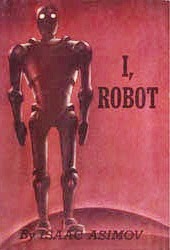 Isaac Asimov and Robert Heinlein (mentioned below), among many others, wrote countless short stories and pulp novels published in the venerable sci-fi magazines of the ’50s, mostly to do with space travel, time travel, alien races and the like, all the science fiction tropes that were, for the most part, old hat even then. Most of these works have aged poorly, cursed with flat characters and dull prose, tossed into the boys-adventure bin alongside Doc Savage and the Hardy Boys; but their best works, informed by compelling ideas, remain relevant and entertaining. Most sci-fi lists include Asimov’s Foundation series, and while I agree that its millennia-spanning vision of galactic civilization has been influential, it also reads like a historical artifact, whereas I, Robot remains interesting to modern readers. Ray Bradbury worked alongside the pulp authors, but his work has fared far better over the years, since it always relied more on his lambent prose than the novelty of a new premise.
Worth mentioning together are Wyndham’s and Miller’s books, both set post-nuclear apocalypse. While Wyndham used nuclear armageddon primarily as an excuse for a fantastical future dystopia (the most common application of apocalypse in fiction), Miller’s is concerned with the human drive to self-destruction itself, a theme addressed also in Neville Shute’s On the Beach (1957) and, much later, in Cormac McCarthy’s The Road (below).
Expanding Consciousness: Trippy Shit From the ’60s
Robert Heinlein, Stranger in a Strange Land (1961)
Anthony Burgess, A Clockwork Orange (1962)
Philip K. Dick, The Man in the High Castle (1962), Do Androids Dream of Electric Sheep? (1968), Ubik (1969)
Madeleine L’Engle, A Wrinkle in Time (1962)
Frank Herbert, Dune (1965)
Arthur C. Clarke, 2001 (1968), Rendezvous with Rama (1973)
Ursula K. Le Guin, the Earthsea trilogy (1968), The Left Hand of Darkness (1969), The Lathe of Heaven (1971), The Dispossessed (1974)
Kurt Vonnegut, Slaughterhouse-5 (1969)
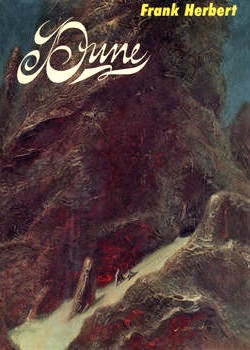 The ’60s were a decade marked by experimentation, and nowhere is that clearer than in science fiction. These authors pushed against boundaries in every direction, demanding readers fundamentally re-examine their views on religion, sex, marriage, history, politics, gender, and consciousness itself, from the alien views and mystical powers of Heinlein’s Michael Valentine Smith, to Philip K. Dick’s over-the-limit reality-bending, to Herbert’s mind-expanding spice. Herbert’s Dune demands special mention as perhaps the single greatest science fiction book ever written, at once lyrical, daring, philosophically fascinating and tightly plotted. Ursula Le Guin has consistently crossed boundaries in her writing, her stories invariably moving in unexpected directions to challenge our own genre expectations.
There are a couple of odd ducks here as well. Burgess’s A Clockwork Orange is more in keeping with the dystopias of the ’50s, milk with knives in it notwithstanding, although the Cockney-Slavic dialect he wrote it in is as experimental as it gets. Arthur C. Clarke stands with Heinlein and Asimov in his hard-sci-fi style, although his is yet more opaque in character, enhancing the sense of mystery in his uncommunicative alien artifacts. Kurt Vonnegut’s Slaughterhouse-5 is, to my mind, only nominally science fiction, the fantastic elements mostly a narrative method to convey Vonnegut’s own experiences in World War II, but it’s also one of my favorite books, so I’m including it anyway.
Escape from Reality: ’70s and ’80s
Roger Zelazny, The Chronicles of Amber (1970)
Phillip Jose Farmer, the Riverworld series (1971)
Larry Niven and Jerry Pournelle, The Mote in God’s Eye (1974),Footfall (1985)
Piers Anthony, A Spell for Chameleon (1976)
Frederick Pohl, Gateway (1977)
Anne McCaffrey, The White Dragon (1978), Crystal Singer (1982)
Douglas Adams, The Hitchhiker’s Guide to the Galaxy (1979)
Michael Ende, The Neverending Story (1979)
Stephen King, Skeleton Crew (1979), The Running Man (1982), It (1986), The Drawing of the Three (1987)
Julian May, Saga of the Pliocene Exile (1981)
Alan Dean Foster, Nor Crystal Tears (1982)
Tim Powers, The Anubis Gates (1983), Last Call (1992)
By and large, these are light books, paperbacks to read on the bus, or for a twelve-year-old to stick in his backpack (as was invariably the case with me). Their prose is not necessarily the finest, their ideas not necessarily the freshest; they rely primarily on world-building for their fascination. And yet, I have a tremendous fondness for them, as I do for beautiful places I travelled to once and enjoyed a great deal. And in each there is something remarkable: Zelazny’s shadow-riding princes of Amber, Farmer’s colorful cast of historical misfits, Niven’s and Pournelle’s inventive aliens, Anthony’s light-as-air humor, May’s embellishments and refinements of psychic powers.
 There are also, however, a few more substantial works in with the escapists. Adams’ Hitchhiker’s Guide is one of the funniest books every written, with profundity constantly peeking from beneath the absurdity. Ende’s Neverending Story is about fantasy itself, the liberating power of the imagination, and how that power gets lost in adulthood. (Also, while everyone’s seen the movie, the movie actually only covers the first half of the book – and that’s not even necessarily the better half.) Stephen King, of course, is always put on the horror shelf – I think they put that shelf there just for him – but in fact, he’s a superb fantasist and an unmatched master of suspense. I’ve listed four of his best, but if you’re going to just read one, make it It.
The Digital Age and Dawning Disillusionment
William Gibson, Neuromancer (1984), Idoru (1996), The Peripheral (2014)
Orson Scott Card, Ender’s Game (1985)
Greg Bear, Blood Music (1985), Hull Zero Three (2010)
Alan Moore and Dave Gibbons, Watchmen (1986)
David Brin, The Uplift War (1987)
Dan Simmons, Hyperion Cantos (1989)
Neal Stephenson, Snow Crash (1992), The Diamond Age (1995)
Jeff Noon, Vurt (1993)
Phillip Pullman, His Dark Materials (1995)
Bruce Sterling, Holy Fire (1996)
George R.R. Martin, A Song of Ice and Fire (1996)
Mark Z. Danielewski, House of Leaves (2000)
China Mieville, Perdido Street Station (2000), The Scar (2004)
Neil Gaiman, American Gods (2001)
Richard Morgan, Altered Carbon (2002), Broken Angels (2003)
Susanna Clarke, Jonathan Strange and Mr. Norrell (2004)
Vernor Vinge, Rainbows End (2006)
Cormac McCarthy, The Road (2006)
Max Brooks, World War Z (2006)
Paolo Bacigalupi, The Windup Girl (2009)
Lev Grossman, The Magicians trilogy (2009)
Kim Stanley Robinson, 2312 (2012)
David Mitchell, The Bone Clocks (2014)
Yoon Ha Lee, Ninefox Gambit (2016)
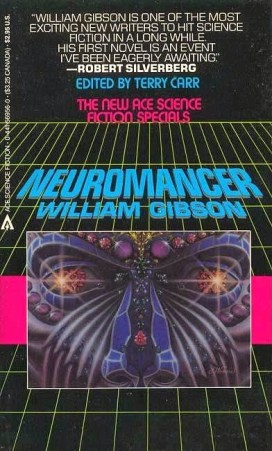 Few books stand so clearly as boundary markers in literature as William Gibson’s Neuromancer. At its pulsing heart was a burning vision of the digital future, in which all information could be represented in virtual reality, and hackers rode programs like cracked-out sharks diving into deadly AI ice. Its ideas, and the dawning computer age that informed them, invigorated the genre like nothing had since space flight and LSD. Most futurist novels that followed dealt with the implications of the digital revolution, along with the continuous miniaturization of computer systems that accompanied it: Blood Music, Hyperion Cantos, Snow Crash, Vurt, Holy Fire, American Gods, Altered Carbon, Rainbows End, 2312.
There is a second trend here, namely a broader cultural mood of disillusionment and pessimism about the future. McCarthy’s The Road may be the darkest book every written, and its ashen landscapes are a precise description of nuclear winter. George Martin brought new life to sword-and-sorcery by casting his characters as cynical, power-hungry scrabblers in a dirty, violent world, and Phillip Pullman stoked some minor controversy by penning a popular young-adult trilogy with an atheist slant. Alan Moore’s Watchmen (yes, it’s a graphic novel, but it’s too good not to include) offered a vital critique of superheroes, depicting them variously as violent vigilantes, sociopaths, sexual fetishists, or disinterested gods.
Several of these works also display an increasing literary sophistication, from the hard, unsparing sentences of The Road (the only sci-fi book to ever win the Pulitzer), to David Mitchell’s cunningly interlocked plots, Susanna Clarke’s endless spinning of fairy tales, and Mark Danielewski’s labyrinthine textual constructions. Along with the wonderfully inventive genre-bending of his New Crobuzon books, China Mieville is known for literary experiments like The City & the City and Embassytown. Worth mentioning also is Michael Chabon’s The Yiddish Policemen’s Union, set in an alternate-universe Alaska.
While it’s true I’ve included a few of these selections for “educational” purposes (Verne and Wells, Huxley, Orwell, Miller, Burgess), I also want to say that as a rule, these aren’t hard books to read. To the contrary: they’re nearly all fast-paced, grip-you-by-the-throat stories that I’ve read and reread until the pages fell free from their bindings, out of pure fascination and delight. Just last Sunday I finished Gibson’s The Peripheral, and it was good, so freaking good, I felt like I was thirteen again, reading Neuromancer for the first time, with the very same sense of wonder at how strange the world is and how strange it may yet become.